PhD in City & Regional Planning
Berkeley’s PhD in City & Regional Planning provides training in urban and planning theory, advanced research, and the practice of planning.

About the Program
Established in 1968, the program has granted more than 160 doctorates. Alums of the program have established national and international reputations as planning educators, social science researchers and theorists, policy makers, and practitioners. Today, the program is served by nearly 20 city and regional planning faculty with expertise in community and economic development, transportation planning, urban design, international development, environmental planning, and global urbanism. With close ties to numerous research centers and initiatives, the program encourages its students to develop specializations within the field of urban studies and planning and to expand their intellectual horizons through training in the related fields of architecture, landscape architecture and environmental planning, civil engineering, anthropology, geography, sociology, public policy, public health, and political science.
Completing a PhD in City & Regional Planning at UC Berkeley usually takes five years. The university requires all doctoral students to fulfill a minimum residency requirement of two years and 48 units of coursework. Full-time students are expected to take four courses, or 12 units, per semester. For the PhD in City & Regional Planning, students must complete various program requirements, including courses in planning and urban theory; research methods courses; and preparation and completion of two fields of specialization. They must also successfully complete an oral qualifying examination, which allows them to advance to candidacy and undertake dissertation research. A PhD is awarded upon completion of a written dissertation approved by the faculty supervisors of the dissertation.
The PhD program encourages its students to build intellectual community and to participate in national and international venues of scholarship. Doctoral candidates regularly present their research at the annual conferences of the Association of Collegiate Schools of Planning, Association of American Geographers, Association of European Schools of Planning, World Planning Schools Congress, Urban Affairs Association, and American Anthropological Association. They organize and participate in a weekly research colloquium and manage the Berkeley Planning Journal, a peer-reviewed academic publication. Such activities utilize the incredible intellectual resources available to doctoral students at UC Berkeley, both within their departments and programs and across the campus.

The Berkeley Planning Journal is a peer-reviewed scholarly publication published annually by UC Berkeley’s City & Regional Planning PhD cohort. It features innovative and research-oriented articles on contemporary topics in planning and urbanism. Authors include students, faculty, and others in the Berkeley planning community, as well as scholars and practitioners from other institutions. More>
Financial Aid + Admissions
Admission to the PhD program is highly competitive. Applicants are required to have completed a master’s degree in planning or a related field. They are expected to demonstrate capacity for advanced research and to present a compelling research topic as part of their application. Once admitted to the program, students are eligible to compete for various university fellowships, including the Berkeley Fellowship, Cota-Robles Fellowship, and the Foreign Language and Area Studies Fellowship. Students of the program have also been successful in securing funding for dissertation research from the National Science Foundation, Social Science Research Council, and the Fulbright scholarships.
The Department of City & Regional Planning and UC Berkeley offer multiple types of financial support to its graduate students.
Please note that admission decisions are not made by individual faculty, but rather an admissions committee. Our PhD admissions process begins with three initial reviews of your application: the two faculty members you list as preferred advisors and one member of the PhD admission committee. The admission committee then meets to review all applications as a cohort and make admission/denial decisions. More information can be found on the department admissions page.
Prerequisites
The principal admission requirements to the doctoral program in City & Regional Planning are overall excellence in past academic work and research, demonstrated creativity and intellectual leadership in professional activity, and the strong promise of sustained intellectual achievement, originality, and scholarship. The emphasis in the doctoral program is upon scholarship and research. At the same time, because the doctorate is offered in the context of a professional school, doctoral students are challenged to undertake applied research relevant to city and regional planning and policy problems. If you do not want to teach in planning or a related field, or to do advanced research, please reconsider applying to this program. Most doctoral students enter the program with a master’s degree in planning or a related field. The Master of City Planning is regarded as a terminal professional degree, and is not comparable to mid-study Master of Arts or Master of Science degrees offered in anticipation of the doctorate.
Admission to the doctoral program is very competitive. Only six to eight students are admitted each year, sometimes from a pool of as many as 80 applicants. For all applicants to the doctoral program (even those required to take an English-language competency exam (TOEFL, TOEFL CBT, iBT TOEFL, or IELTS) the Graduate Record Examination (GRE) is required. Applicants must also secure at least three letters of recommendation that can explicitly evaluate their intellectual capability and past research and academic work.
Please note that admission decisions are not made by individual faculty, but rather an admissions committee. DCRP’s PhD admissions process begins with three initial reviews of your application: the two faculty members you list as preferred advisors and one member of the PhD admission committee. The admission committee then meets to review all applications as a cohort and make admission/denial decisions.
FACULTY
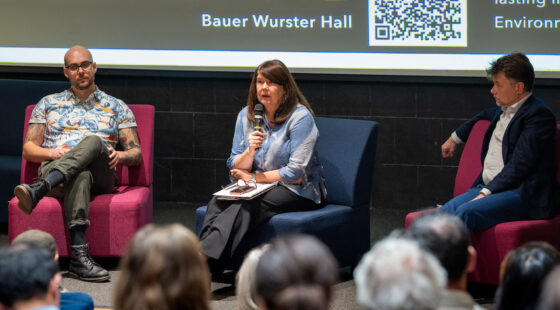
At Berkeley, you’ll have the opportunity to study with world-class faculty who are experts in a range of disciplines, including city planning, public policy, anthropology, geography, physics, and architecture. View Department of City & Regional Planning faculty>
Designated Emphases
Many PhD students choose to pursue one or more of the designated emphases (DEs) offered through programs across campus. These DEs are unrelated to the outside field required by the City & Regional Planning PhD, and can be thought of instead as elective “minors” which provide opportunities for focused interdisciplinary work, mentorship, conference funding, research fellowships and an extra credential along with the doctoral degree. Common DEs pursued by DCRP PhD students include: