UC Berkeley College of Environmental Design is ranked the No. 1 public university in the U.S. for architecture and the built environment.
Research & Design


Research Centers & Labs
The Terner Center for Housing Innovation’s mission is to formulate bold strategies to house families from all walks of life in vibrant, sustainable, and affordable homes and communities. Its work provides analysis and data-driven research to support policy and innovation for policymakers, practitioners, and advocates.
The mission of the Center for the Built Environment, an affiliated research center, is to improve the environmental quality and energy efficiency of buildings by providing timely, unbiased information on building technologies, design, and operation strategies. Its core research team includes faculty from the Department of Architecture.
CED faculty across departments and disciplines direct research labs that tackle a range of environmental and design issues. These labs are engines for the production of knowledge and new discoveries in the college and provide valuable research opportunities for students.
Research from the Center for Cities & Schools shows how low-wealth districts are being left behind and informs the current debate over policy reform. The National Center on School Infrastructure (NCSI) is a national resource hub for modernizing school buildings and grounds. Both centers are housed in CED’s Institute of Urban & Regional Development.


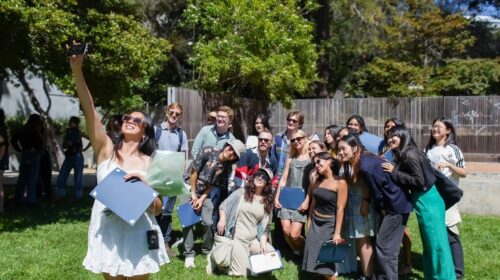



“The spectrum of course offerings — from theoretical to practical, from global to local — was my favorite part of my CED education. I took classes from faculty who served as planning commissioners for the city of Berkeley and from those who are pushing the field of geography to better understand global inequality. That incredibly wide range begins to make sense when you spend time in CED and come to understand the symbiotic relationship between the college and city that surrounds it.”
— Brandon Yung, BA Urban Studies, 2022


“I chose Berkeley for its reputation for design excellence and commitment to social justice, but what I came to value most was the supportive and collaborative studio culture.”
— Al Oliva (MArch 2024)
NEWS

Systemwide Vice Provost for Academic Affairs Monica Varsanyi, an immigration scholar, joins City & Regional Planning faculty

Sean Canty appointed assistant professor of architecture

Emmett Zeifman joins Department of Architecture

Dorothée Imbert named chair of UC Berkeley’s Department of Landscape Architecture & Environmental Planning

Stephen J. Collier appointed chair of the Department of City & Regional Planning

Wallpaper* US400 | Eight CED alums shaping the creative landscape

“Coming Home”: Lyndon Neri and Rossana Hu address CED graduating class of 2026

Daniel G. Chatman begins tenure as interim dean of the College of Environmental Design

Inside the “concrete battery”: CED researcher Stefano Schiavon exposes lethal heat in Florida prisons

Nicholas de Monchaux appointed dean of the College of Environmental Design
EVENTS

Hindsight 2026 | Environmental Design Archives Exhibition

Yung Ho Chang: How a House in the Sky Landed on Earth? | CED in Hong Kong

Laura Sánchez Carrasco & Íñigo Cobeta: What Space Builds | Architecture Lecture

Mona Fawaz: Planning Amid Division — The Politics of the “Public” in Beirut | City & Regional Planning Lecture

No Single Fix: How to Build More Housing in California | Sustainable Environmental Design Lecture

Julie Riley: Surface Conditions | Architecture Lecture

*POSTPONED* Casper Mork-Ulnes: The Craft of Place | Architecture Lecture

“Berkeley gave us a belief we have never lost — that architecture can change lives. That the spaces we make, the cities we shape, the boundaries we draw — they matter, deeply, to the people who live inside them. That belief was formed here, in these four years at Wurster Hall.”
— Rossana Hu (BA Architecture 1990) & Lyndon Neri (BA Architecture 1987), CED Commencement Address 2026