Master of City Planning
The Master of City Planning (MCP) at UC Berkeley is a two-year nationally accredited STEM degree program that empowers you to successfully practice planning in a variety of urban, metropolitan, and regional settings. Berkeley’s MCP offers a rigorous curriculum and inclusive environment designed to prepare you to contribute to making cities sustainable, equitable, and accessible for all.
As an MCP student, you’ll develop expertise in city and regional planning fields as well as build analytical, research, and communication skills. UC Berkeley’s MCP is distinguished by its focus on the human impacts of planning decisions, with particular attention to equity, diversity, and justice.

About the Master of City Planning

As a UC Berkeley Master of City Planning student, you’ll join a department committed to improving the equity, economy and environment of neighborhoods, communities, cities, and metropolitan regions. The department’s teaching and research is grounded in a dedication to understanding the historical and theoretical underpinnings of planning governance and practice. We aim to design and create cities, infrastructure, and public services that are sustainable, affordable, enjoyable, and accessible to all.
As an MCP student, you’ll gain:
- Lifelong analytical, research, and communication skills
- Knowledge and skill sets to successfully practice planning in a variety of urban, metropolitan, and regional settings
- An understanding of the history and theory of planning
- Comparative, international perspectives on the development of cities and urban regions
- Sensitivity to the human impacts of planning decisions, with particular attention to equity, diversity, and racial and social justice
UC Berkeley’s MCP combines a common core curriculum with the opportunity to specialize in one or more of the following concentration areas:
- Environmental Planning and Healthy Cities
- Housing, Community, and Economic Development
- Transportation Policy and Planning
- Urban Design
About the College of Environmental Design
The Department of City & Regional Planning offers a rich intellectual community rooted in the dynamic contexts of UC Berkeley, the Bay Area, and California. As a UC Berkeley graduate student, you will be studying at the number one public university, alongside the brightest and most passionate students from around the world. UC Berkeley’s environment is characterized by a deep commitment to critical inquiry, collaborative discovery, and innovation.
The Department of City & Regional Planning, founded in 1948, joined with the Departments of Architecture and Landscape Architecture to form the College of Environmental Design in 1959. Berkeley was the first university to bring together these disciplines into a single college, leading the way toward an integrated approach to analyzing, understanding, and designing our built environment. The college emphasizes environmental design as a profoundly ethical practice, inseparable from social, political, economic, and cultural contexts and co-produced through dynamic engagements with diverse communities.
Our Multidisciplinary Faculty
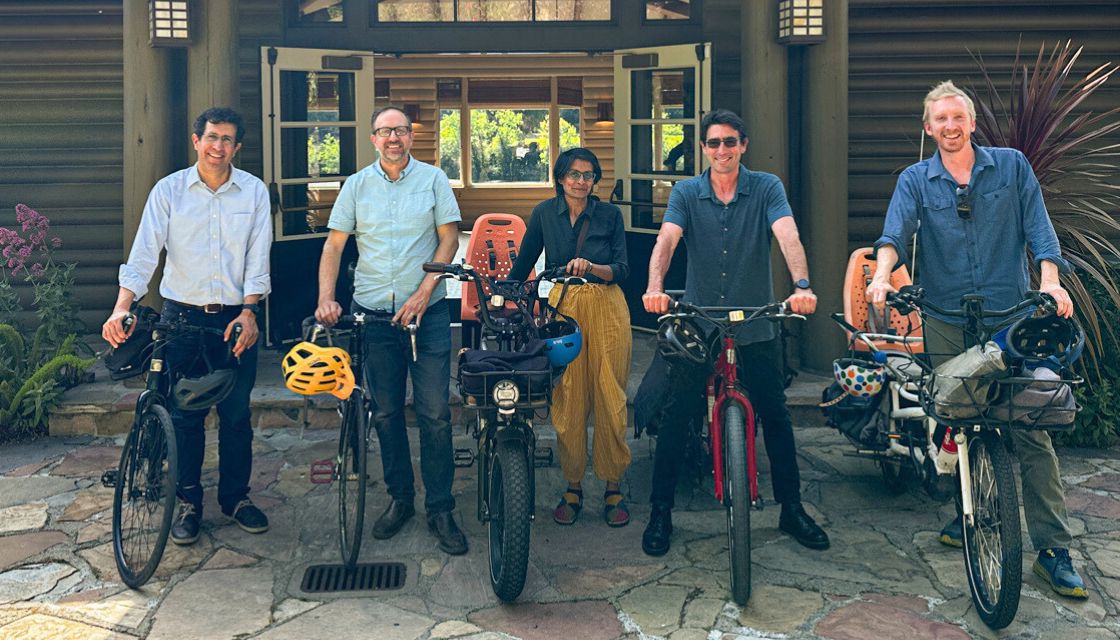
In UC Berkeley’s MCP program, you’ll have the opportunity to study with world-class faculty who are experts in a range of disciplines, including city planning, public policy, anthropology, geography, physics, and architecture.
- Faculty Specializations
- Climate change: Sustainable urbanism, environmental and climate justice, decarbonization, climate resilience, political ecology
- Housing planning and policy: Affordable housing development, land use and zoning policy, mortgage finance, land markets and urban economics, property rights, homelessness, mobile homes and manufactured housing
- Inequality and segregation: Urban poverty, the cultural and political economy of racism, racial and gender inequalities, class and racial segregation
- Healthy cities: Water and sanitation infrastructure, food systems planning and food security, environmental health, urban gun violence reduction
- Transportation policy and planning: Active planning, transportation infrastructure, land use planning
- Data science: GIS, computer modeling, spatial analysis, machine learning and artificial intelligence
- Community and economic development: education policy, access to credit, community organizing, workforce development and green jobs, community land trusts
- Planning history and theory, comparative urban studies, urban governance
Plan of Study
The MCP curriculum balances the need to develop core planning knowledge and skills (the core), expertise in a specific domain of planning (the concentrations), and the flexibility to use elective credits to either a) deepen expertise in a specific domain, b) broaden knowledge of a wider range of planning courses by studying the intersections between environmental planning, housing, land use, and transportation, c) deepen methodological skills in GIS, data science, design, or qualitative and participatory methods, or d) take classes across UC Berkeley’s dynamic campus.
The MCP is a two-year, in-residence program. To earn the MCP degree, you must complete:
- 48 units of in-residence coursework or 36 units in concurrent/dual degree programs
- Courses in the core curriculum (history and theory, economics, law, and methods)
- Courses in at least one concentration area
- A studio course, a group based learning environment that integrates substantive and methodological knowledge for an external client
- A capstone project consisting of either a client report, a professional report, or a master’s thesis
Concentrations
You have the choice of four concentrations designed to support inquiry and expertise in a specific planning domain. For more information on each of the concentrations as well as the specific course offerings.
- Environmental Planning and Healthy Cities (EPHC)
- Housing, Community, and Economic Development (HCED)
- Transportation Policy and Planning (TPP)
- Urban Design (UD)
In the Environmental Planning and Healthy Cities concentration, you will be trained in theory and practice in the areas of climate change, urban sustainability, resilience, environmental justice, political ecology, and human health.
Faculty: Charisma Acey, Stephen Collier, Jason Corburn, Zoe Hamstead
The concentration in Environmental Planning and Healthy Cities (EPHC) provides you with the knowledge and skills necessary to analyze and plan for pressing urban environmental and health challenges, such as climate change, natural resource depletion, access to basic services and infrastructure, and ecologic and human health risks and mitigation, especially as they impact socially vulnerable people and communities. The concentration introduces you to the relationships among natural, built, and social environments in cities, as well as the local, regional and global impacts of urban ecosystems and the political institutions that aim to manage these environments.
In the Housing, Community, and Economic Development CED concentration, you are exposed to the theory and practice underlying efforts to address the systemic inequalities that produce racially, ethnically, and religiously segregated landscapes of poverty and wealth.
Faculty: Sai Balakrishnan, Max Buchholz, Teresa Caldeira, Justin Hosbey, Zachary Lamb, Ben Metcalf, Deborah McKoy, Carolina Reid
The concentration in Housing Community and Economic Development (HCED) provides you with the knowledge and skills necessary to analyze and address issues of racial, social, and economic justice, including topics such as affordable housing development, property rights and land tenure, segregation, racial capitalism, local and regional economic development, education and schools, and global urban inequalities.
This concentration draws on two strong strands of faculty expertise: 1) a theoretically informed understanding of private property and land tenure, segregation, and the production of urban inequalities, and 2) a practice-oriented approach to housing policy, affordable housing development, and inclusionary forms of land organization, both in the United States and the Global South.
In the Transportation Policy and Planning concentration, you are exposed to the theory and practice of planning for urban transportation, including active and public transit systems, land use, and interactions of transportation and land use with the built, natural, and social environments.
Faculty: Daniel Chatman, Marta González, Daniel Rodríguez, Karen Trapenberg-Frick
The Transportation Policy and Planning (TPP) concentration provides you with the knowledge and skills to address the planning and policy challenges encountered by attempting to increase the use of environmentally sustainable travel modes — walking, cycling, public transit — and the creation of environmentally sustainable land-use patterns, such as compact growth and transit-oriented development. The TPP concentration is characterized by a multidisciplinary focus on the intersections between regional mobility, air quality, global climate change, energy, and equality of access. The courses in the concentration are focused around themes of equity, environmental justice, and social welfare. They present the social, economic, and environmental implications of transportation and land use plans and policies, and promote economic efficiency, green transport, resource conservation, and environmental protection.
Urban Design (UD) In the Urban Design (UD) concentration, you are exposed to the theory and practice of urban design, with attention to how changes to the built environment can respond to social, environmental, and economic concerns.
Faculty: Maryam Hosseini, Zachary Lamb
The Urban Design (UD) concentration focuses on how places look, how they feel, how they relate to natural processes, and how they work for the people who use them. It provides you with the knowledge and skills to shape built and natural environments both directly through their proposals for specific interventions and indirectly through their contributions to policies and plans that shape the actions of other city making actors.
Courses in urban design focus on the public realm of cities, with central concerns being livability, identity, place-making, equity, environmental performance, the interface between the public and private realms, and the quality of everyday life. The concentration draws on approaches from the disciplines of city planning, architecture, and landscape architecture, as well as theories and methods from the social sciences with the intent of analyzing the urban condition and designing the urban realm.
Concurrent Degrees
You can expand your course of study by earning a concurrent degree with your MCP. We offer the following concurrent degrees: Master of Architecture, Master of Landscape Architecture, Master of Public Health, Master of Science in Transportation Engineering, Juris Doctor (law).
Student Organizations
College of Environmental Design Students of Color (CEDSOC) aims to develop and expand the academic and social support, mentorship, career networking, and advocacy efforts for students of color and other underrepresented students.
The Planning Students Association (PSA) supports the MCP program professionally through events such as alumni mixers, socially through trips and other events, and through student advocacy.
TRANSOC supports the well-being and success of transportation graduate students from related disciplines across the UC Berkeley campus. Its mission is to empower students with abundant academic, social, and professional resources and connect current students with a powerful global network of alums.
Internships and Careers
MCP students often complete a three-month internship at a government agency, nonprofit, or private firm, or other planning-related organization, in the summer after the first year.
These internships provide valuable professional development experiences, and often pave the way for future careers. Our graduates go on to careers in many different sectors and roles, including public agencies (at the local, regional, state and federal level), nonprofits and community organizations, consulting firms, research institutions and universities, and elected officials. Common focus areas include sustainable transportation and land use, housing, economic development, urban health and social policy, environmental sustainability, global urbanization and poverty, and urban design for livable places.
- Selected Employers
- Public Agencies: City and County of San Francisco; Cities of Berkeley, Richmond, Albany, and Oakland; Alameda County of Public Health; San Francisco Parks and Recreation; ABAG; California Department of Housing and Community Development; California Coastal Commission; County of Marin; US Department of Housing and Urban Development; US Environmental Protection Agency; MTC, SFMTA
- Research and Policy Organizations: SPUR, BAE Urban Economics, PolicyLink, Terner Center for Housing Innovation, The Urban Institute, Nelson / Nygaard Consulting Associates, Enterprise Community Partners
- Housing and Community Development: Chinatown Community Development Center, The Unity Council, Bridge Housing, Midpen Housing, Eden Housing, Resources for Community Development, SAHA, EBALDC, the Community Builders
- Transportation: Fehr and Peers, Nelson\Nygaard Consulting Associates, Center for Transportation and the Environment
- Academia: University of Maryland, College Park; University of Illinois, Urbana-Champaign, UC Davis, UCLA, NYU, Columbia University
Financing Your Education
We are committed to recruiting students of outstanding achievement and potential, regardless of ability to pay.
- Fees + Financial Aid
- Arcus Social Justice Corps Fellowship
- Fellowships
- Foreign Language and Area Studies (FLAS) Fellowship
In addition to tuition, UC Berkeley students pay several types of fees, including a campus fee, student services fee, and others. Students enrolled in professional degree programs, including the MCP, are also charged Professional Degree Supplemental Tuition (PDST).Find current tuition and fee information at Office of the Registrar.
The Department of Landscape Architecture & Environmental Planning offers several scholarships to incoming students, based on evidence of academic excellence. Notification of these nominative awards arrive with your acceptance letter. Students are also encouraged to apply for competitive university fellowships.
Find information about financial aid and student employment at Fees + Financial Aid.
If you are applying to one of CED’s master’s degree programs and intend to pursue social justice work after graduation, we encourage you to apply for the Arcus Social Justice Corps fellowship.
If you plan to pursue social impact work after earning your degree, we encourage you to apply for the Arcus Social Justice Corps fellowship, which provides full funding so you can graduate debt-free. Please note: the Arcus Fellowship is available only to domestic students.
Each year, CED and its departments award a limited number of fellowships for incoming domestic and international graduate students, based on merit and/or need. Departmental funding packages vary on a case-by-case basis. Applicants are considered for funding packages and financial support by each departmental admissions committee and are notified of any funding in their letters of admission; a separate fellowship application is not required. The university awards, through competition, a limited number of merit-based and diversity fellowships each year. We recommend that you also seek financial support independent of university sources. We encourage you to explore the fellowship database compiled by Grad Division.
As a CED student, you are also eligible to apply for numerous competitive scholarships, fellowships, prizes, awards, and internships.
UC Berkeley Graduate Division’s Foreign Language and Area Studies (FLAS) Fellowships provide funding to students to encourage the study of critical and less commonly taught foreign languages in combination with area studies, international studies or international aspects of professional studies. The purpose of the FLAS program is to promote the training of students who intend to make their careers in college or university teaching, government service, or other employment where knowledge of foreign languages and cultures is essential.
HOW TO APPLY
UC Berkeley begins accepting applications in early September for the following fall term only (no spring admissions). The fall semester begins in mid-August.
We recommend you start the application process as soon as possible. As a prospective graduate student, you’ll submit your application through UC Berkeley’s Graduate Division. You’ll find lots of useful information on the Graduate Division website, including application instructions and information about funding your education.
- Review admissions requirements on the Graduate Division website
- Gather materials:
- Unofficial transcripts for each prior college or university attended
- Statement of Purpose. For tips on writing the Statement of Purpose, please see Writing the Statement of Purpose on the UC Berkeley Graduate Division website.
- Personal Statement. For tips on writing a Personal History Statement, please see the Personal Statement Guide on the UC Berkeley Graduate Division website.
- Contact information for three recommenders
- Resume/CV
- Evidence of English Language proficiency. For waivers, visit the Graduate Division website.
- Names of two faculty members you are interested in working with and why. View faculty profiles.
- Information about relevant coursework
- List of relevant publications or presentation
- List of honors/awards
- URL of website where your work is published, if applicable
- Start your application on the Graduate Division website. You do not have to complete the entire application at one time: we recommend you start your application and review it as soon as possible.
- Scroll down and select Master of City Planning (MCP).
- Follow the instructions in the application. See below for MCP-specific instructions and specifications for supplemental materials.
- Pay fee.
- Submit application. Allow yourself at least one hour prior to the deadline to submit your application. Late applications or changes to the application after the deadline will NOT be accepted.
- After submitting your application, you will receive an email from UC Berkeley’s Graduate Admissions Office confirming your submission.
- We strongly encourage you to log back into your application to monitor the status of materials received/processed, such as fee waivers, test scores, and recommendations.
- We send admissions decisions, along with notification of fellowship awards, in late March.
Only online applications (including letters of recommendation) are accepted. All documents, regardless of language of instruction, must be translated into the English language. Transcripts, diplomas, and certificates should be provided in the original language of instruction AND in English. Transcripts must show your full name, degree conferral date, and degree.
- MCP-Specific Instructions
- Statement of Purpose
- Personal History Statement
- Letters of Recommendation
- Urban Design Concentration, Concurrent Degrees, and Applications Without Design Background
The MCP application requires the following:
- Bachelor’s degree or recognized equivalent from an accredited institution
- Advanced Grade Point Average (AGPA) of 3.0 or B or better (on a 4-point scale) for all coursework after the first two years of undergraduate study.
- For applicants whose undergraduate institution does NOT utilize a 4-point scale, the calculation of an AGPA is NOT required.
- Please enter your university’s GPA into the Other Scale GPA box.
- For all other GPA boxes (Advanced, Major, Courses Related to Field of Graduate Study), enter “N/A.”
- English Language Proficiency
Statement of Purpose
- 3 pages, double-spaced
- Please discuss (with clarity and focus) why you want to study urban planning, why you want to study at UC Berkeley, and how our program can help you achieve your academic and professional goals.
We encourage you to consider the following:
- Present: What brought you to pursue graduate study in planning?
- Past: What academic, employment experiences (professional work experience and/or internships) or activities (research, co-curricular activities, leadership roles, etc.) bear on your qualifications for this planning program? How do these experiences relate to your decision to study planning?
- Future: What are your long-term career goals? In following the completion of your graduate degree in planning, what kinds of work and professional activities would you like to engage?
Concurrent degree applicants (MArch, MS, MLA, JD, MPH) will submit ONE comprehensive statement that addresses your interest in and fit with both programs.
What should I include in my Statement of Purpose?
The goal of the Statement of Purpose (SOP) is to give the admissions committee the ability to assess whether DCRP is a good match for your professional goals. The Statement of Purpose should indicate, with clarity and focus, your reason for pursuing graduate study in city planning, your proposed emphasis of study, and any special interest(s) in the field. It should highlight and describe your past academic and work experiences. As a professional degree program, we prioritize applicants with at least 1-2 years of work experience. If you are coming directly from undergraduate study, focus on how your internships or volunteer experiences have informed your decision to pursue an MCP. Your SOP can also highlight other relevant activities, such as research, research, co-curricular activities, or leadership roles. See UC Berkeley Graduate Division.
Personal History Statement
- 1-2 pages, double-spaced
- Please describe how your background and life experiences have influenced your decision to pursue a graduate degree at this time. This may include formative experiences, values, or motivations that have influenced your academic and/or professional path.
In this section, you may also include any relevant information on the following:
- Any educational, familial, cultural, economic or social experiences or opportunities that have shaped your academic journey.
- Challenges or responsibilities you have navigated in pursuit of your educational goals, and how you responded to or overcame them.
- Significant barriers or hardships you have faced, and how they have contributed to your growth and shaped your perspective.
- Leadership experiences, community outreach, service initiatives, or research projects you have participated in or plan to pursue that aim to positively impact others or the broader community.
- Ways in which your perspectives, experiences, or aspirations have aligned with UC Berkeley’s Principles of Community.
What should I include in the required Personal History Statement?
The goal of the Personal History Statement is to give the admissions committee a better sense of who you are, and how you would contribute to the department’s mission to create a community of students with diverse perspectives, life experiences, and intellectual interests. It should convey who you are: how has the combination of your life experiences (for example, personal background, education, and/or volunteer or work histories) influenced your decision to apply for a degree in city planning? How have your life, teaching, research, professional and/or public service contributions shaped your thinking about equity, diversity, or sustainability in urban planning? What makes you unique? The Personal History Statement is also a chance to let the committee know about factors that may have influenced your academic or work history, such as barriers to access in higher education.
Letters of Recommendation
- 3 required
- The strongest letters are from individuals who have supervised your work in either an academic, employment (professional work experience and/or internships) or community service capacity.
- Your recommenders are encouraged to describe SPECIFIC EXAMPLES of your work that demonstrate your intellectual ability, creativity, initiative, leadership potential, and promise for graduate study in planning.
In the Recommendations section of the application, for each recommender, you will:
- Enter each recommender’s contact information
- Select your answer for the “access waiver” question
- Provide your signature
- Click “send”
- Thereafter, you should notify your recommenders that they will receive an email from UC Berkeley’s Graduate Admissions Office: gradadm@berkeley.edu. The email’s subject line will be “Recommendation request from [Applicant Name] for the University of California, Berkeley” and the body of the email will outline the steps required to upload their letter to the application system.
- If your recommender has NOT received the email or they CANNOT upload their letter, have your recommender email their letter to DCRP Graduate Student Services: dcrpgrad@berkeley.edu and we will upload it for them.
- You may submit your application BEFORE your recommendations are in the application system.
For MCP–Urban Design Concentration, MARCH/MCP and MLA-2D/MCP, and MLA-3D/MCP only:
Upload a digital portfolio to the Supporting Materials section.
- The portfolio may contain 12 pages total (8- ½”x11″ format, 2-page spread = 2 pages) of urban design related content. Your portfolio will NOT be reviewed beyond 12 pages by the MCP Admissions committee.
- Title page and/or table of contents may be submitted, and will NOT count toward the 12 pages of content.
- The portfolio should showcase recent, high-quality work, and will be assessed on both content and overall design.
Applicants to the MCP–Urban Design track are NOT required to have intensive design training before admission.
Applicants WITHOUT a design background are encouraged to submit work that:
- Shows evidence of visual creativity (studio art, photography, drawing, painting, graphic design, GIS mapping, construction/renovation, web-based projects, etc.) and demonstrates interest in and aptitude for urban design
- Demonstrates the range of analog and digital methods and media that the applicant has worked with
- Highlights work that is related to the scales, questions, and methods of urban design
- Highlight how their work in visual/spatial media is related to broader questions of intellectual and social concern
Any material that is not entirely the applicant’s own work must be clearly identified. This includes identifying your role and contribution in any group work, and identifying the use of AI to generate any written or visual content.
- The portfolio must be saved as a single file in PDF format.
- The file size must be no larger than 10MB.
For more information regarding portfolio requirements for the Master of Architecture application, please visit the MArch Admissions.
For more information regarding specific portfolio requirements for the Master of Landscape Architecture application, visit MLA Admissions.
MCP/MArch applicants not pursuing the Urban Design concentration:
Please refer to the MArch page for portfolio requirements and deadlines.
Public Information
- Tuition + Fees (AY 2025–2026)
- 2024 Admissions + Enrollment Summary
- MCP Student Achievement Survey
- Retention Rate
- Organizational Types
| In State Residents, per full-time academic year 1 | $33,972.50 |
| In State Residents, per full-time academic year 2 | $33,857.50 |
| Estimated Total (In State Residents, Full Time, 2 years) | $67,830 |
| Out of State Residents, per full-time academic year 1 | $46,217.50 |
| Out of State Residents, per full-time academic year 2 | $46,102.50 |
| Estimated Total (Out of State Residents, Full Time, 2 years) | $92,320* |
*This is an estimated amount based on the current tuition and fees. An increase of 3–5% should be expected each year. For a complete breakdown of student tuition, fees, and charges, please see the College of Environmental Design fee schedule on the Office of the Registrar’s website.
For an estimated graduate student budget, which includes tuition and fees as well as personal expenses (housing/utilities, food, books/supplies, and transportation), please visit the Berkeley Financial Aid & Scholarships website.
Applications Received
- Total: 360
- MCP: 324
- MCP/MArch: 8
- MCP/MLA: 7
- MCP/MPH: 9
- MCP/MS: 12
Admitted
- Total: 138
- MCP: 120
- MCP/MArch: 1
- MCP/MLA: 5
- MCP/MPH: 7
- MCP/MS: 5
Enrolled
- Total: 61
Age
- Range: 20–40
- Average: 27
Average Advanced GPA
- 3.74
- Note: The minimum AGPA required is a 3.0 (on a 4‑point scale)
Gender Identity (MCP Only, T = 120)
- Declined to state: 5
- Female: 64
- Genderqueer/Gender Non‑Conforming: 8
- Male: 43
International (MCP Only, T = 120)
- Bangladesh: 1
- Canada: 3
- China: 5
- Ghana: 1
- Hong Kong S.A.R.: 1
- India: 7
- Ireland: 1
- Peru: 2
- South Korea: 1
- Spain: 1
- Taiwan: 1
- Uganda: 1
- United Kingdom: 2
Ethnicity (MCP Only, T = 120)
- 2 or more races: 17
- Asian: 20
- Black or African American: 6
- Hispanic or Latino: 17
- Unknown: 28
- White: 32
Primary Areas of Interest (MCP Only, T = 120)
- Environmental Planning and Healthy Cities (EPHC): 27
- Housing, Community, and Economic Development (HCED): 40
- Transportation Policy and Planning: 35
- Urban Design: 18
Level of preparedness for career after the MCP program:
- 84% responded “somewhat prepared,” “prepared,” or “very prepared.”
Did you achieve your academic goals?
- 88% answered “somewhat agree,” “agree,” or “strongly agree.”
Plans after graduation:
- 81% reported plans to secure work
- 74% of which planned to work in a design or planning related field
- 68% reported plans to work in public service
Student Retention Rate
Percentage of students who began studies in fall 2024 and continued into fall 2025: 100%
Student Graduation Rate
Percentage of students graduating within 4 years, entering class of 2021: 97%
Number of Degrees Awarded
Number of degrees awarded for the 2024–2025 academic year: 40
AICP Pass Rate
Percentage of master’s graduates taking the AICP exam within 3 years who pass, graduating class of 2021: 67%
Employment
Percentage of all graduates obtaining professional planning, planning-related or other positions within 12 months of graduation, graduating class of 2024: 93%
- Educational Institution: 8%
- Government Agency: 41%
- Non-profit: 20%
- Privately Held: 31%